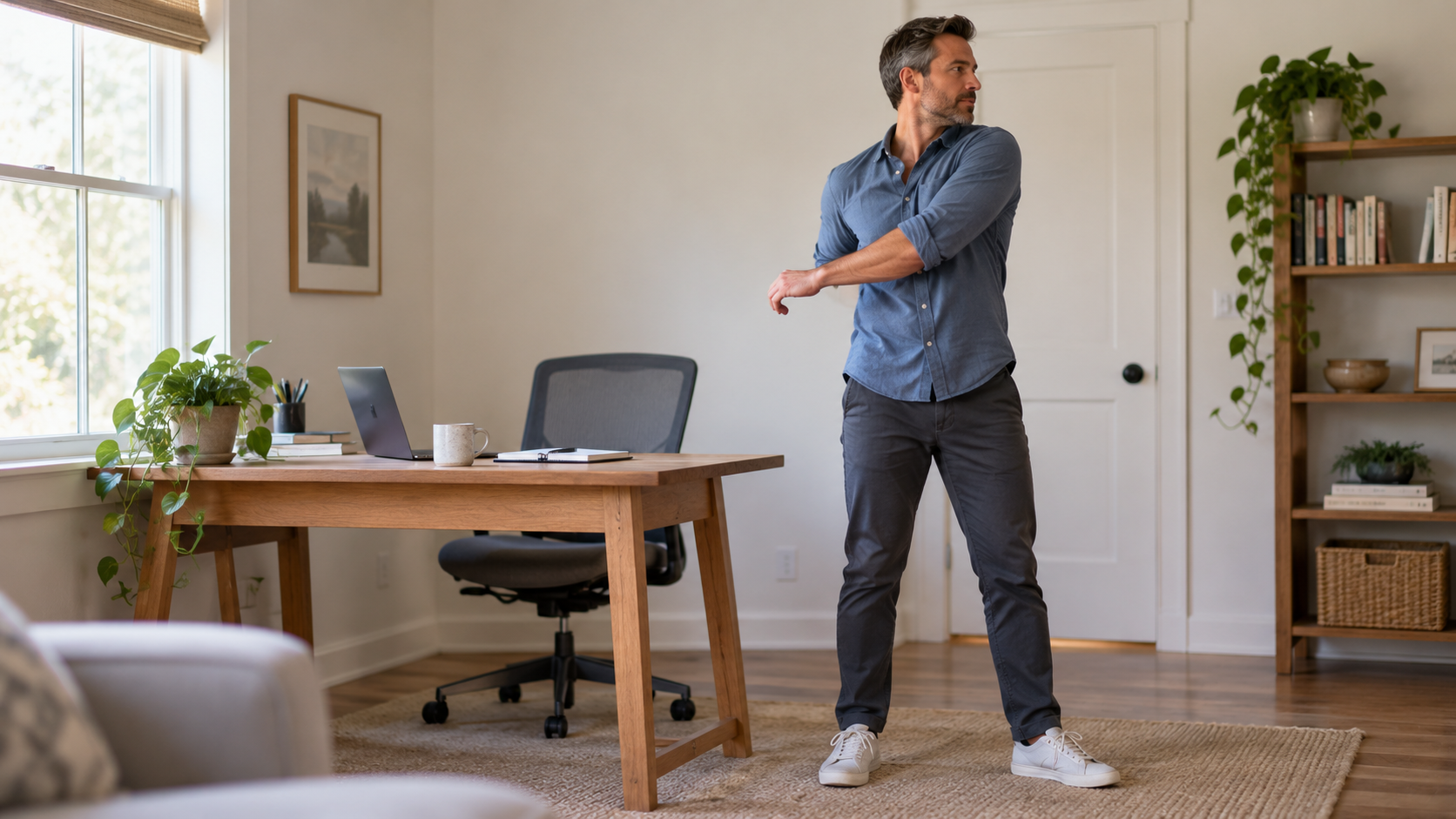
You stand up after a long stretch at your desk and feel it: tight hips, a stiff back, or shoulders that need a little movement.
You stretch, feel better for a while, and then notice the same stiffness later.
Does that mean stretching is pointless? No. But stretching may be only one useful part of your approach.
At Movement Lab, we look at how you move, what you can control, and how your training fits into the rest of your day.
Flexibility and mobility: a useful distinction
For training purposes, it helps to think of flexibility as the range available at a joint, and mobility as your ability to move through a range with control.
For example, reaching a position with help from a strap is different from moving into that position under your own control. Depending on the task, both can matter.
This is why a movement plan can include stretching, controlled movement practice, and strength work. Each gives you a different way to practice moving.
Strength training can improve range of motion, too
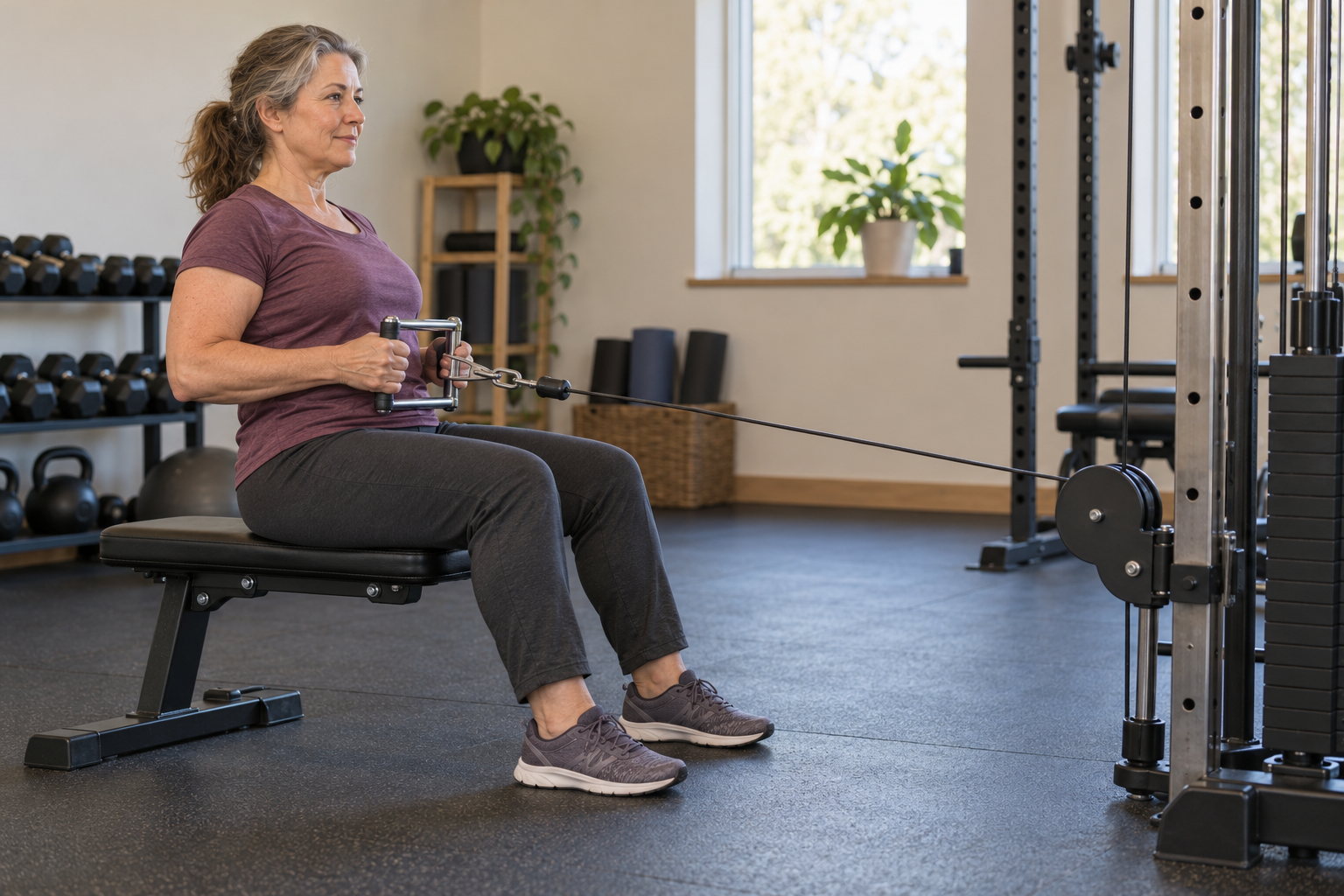
You do not necessarily have to choose between getting stronger and becoming more flexible.
A 2023 systematic review and meta-analysis found that resistance training with external loads improved range of motion in healthy participants. Comparisons with stretching did not show a significant difference in improvements.[1]
That does not mean every strength exercise replaces every stretch. It does suggest that appropriately selected resistance training can be part of a plan to improve how freely you move.
A squat to a comfortable depth, for example, gives you a chance to practice moving your hips, knees, and ankles while managing a load. A controlled row lets you practice moving your shoulders and arms against resistance.
The exercise, load, and range should fit the person. Forcing a deeper position is not the goal.
Do not assume every tight feeling needs a harder stretch
The sensation of tightness does not tell you exactly what is causing it. It also does not automatically mean you need to push farther.
Instead, notice the context. When does the stiffness appear? Does gentle movement help? Did it start after a new workout? Is it affecting everyday activities?
You can use those observations to guide a conversation with your trainer or clinician. Persistent or worsening pain, swelling, numbness, or new weakness deserves clinical assessment rather than a more aggressive stretching routine.
Try a short movement break
For an otherwise healthy adult with ordinary stiffness and no injury-related restrictions, this is a gentle starting point. Use support as needed and keep the movements comfortable.
Walk for one minute. Start at an easy pace.
Perform five sit-to-stands. Use a stable chair and your hands if needed. Lower slowly.
Practice five supported hip hinges. Rest your hands on a stable surface, soften your knees, and move your hips back through a small range.
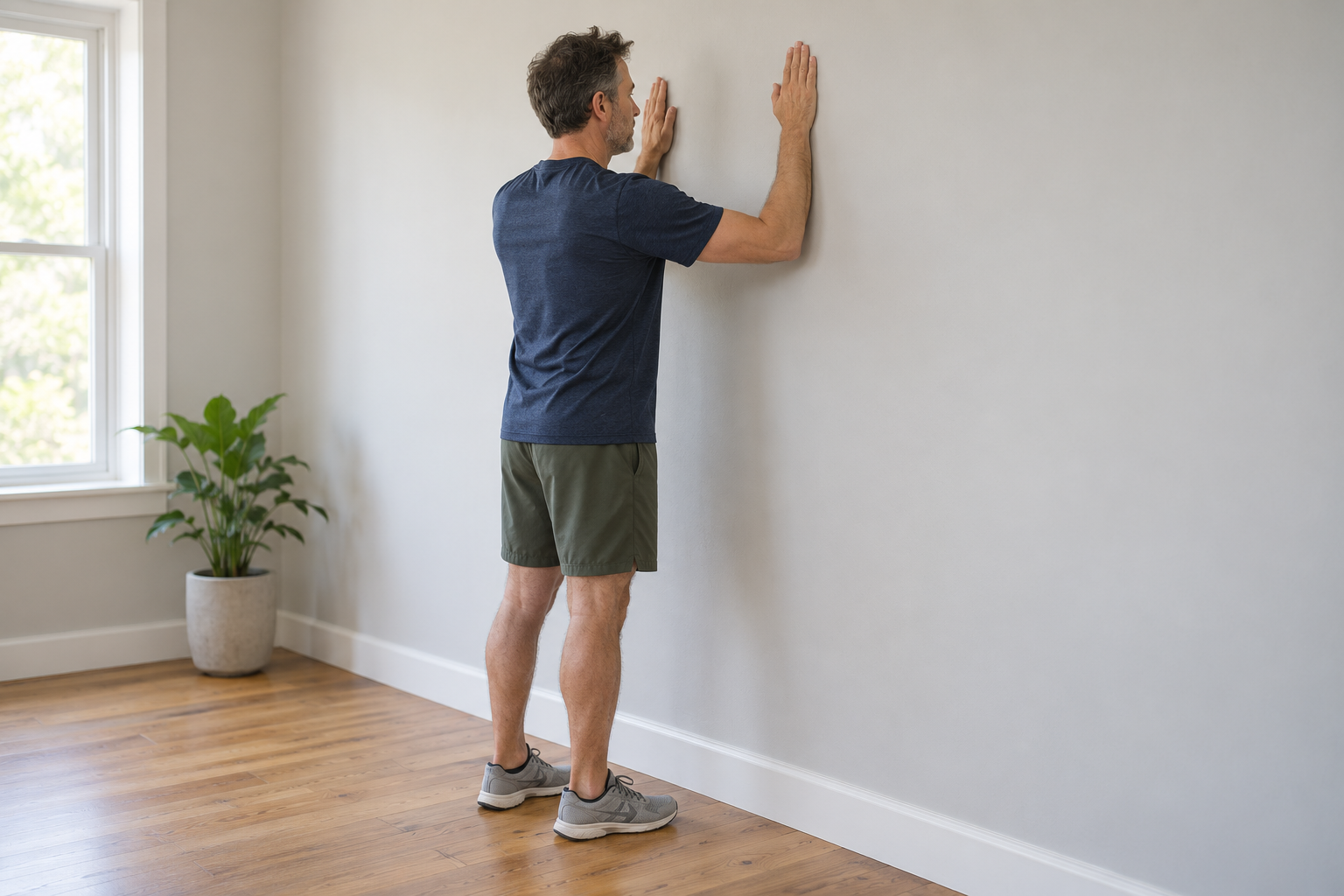
Perform five comfortable wall slides. Slide your arms upward only as far as feels easy; avoid forcing your shoulders or arching your back.
Finish with another minute of walking. Notice how you feel afterward.
This is a brief movement break, not a test of flexibility. Skip any movement that causes pain, and stop if symptoms worsen.
Build on what feels useful
If a stretch feels good, it can have a place in your routine. You can also practice controlled movements and gradually add strength work that suits your current ability.
Keep the plan manageable. You might start with a short movement break during your workday and consistent strength sessions during the week. Pay attention to whether daily tasks become easier, rather than judging progress only by how far you can stretch.
You do not have to reach someone else's range of motion to make meaningful progress.
Find a starting point that fits your body
At Movement Lab, we focus on helping you build strength and control through movements suited to your goals. We can help you choose exercises, adjust the challenge, and develop a routine you can keep practicing.
Want guidance with your movement and strength routine? Contact Movement Lab to discuss your goals and take the next step.