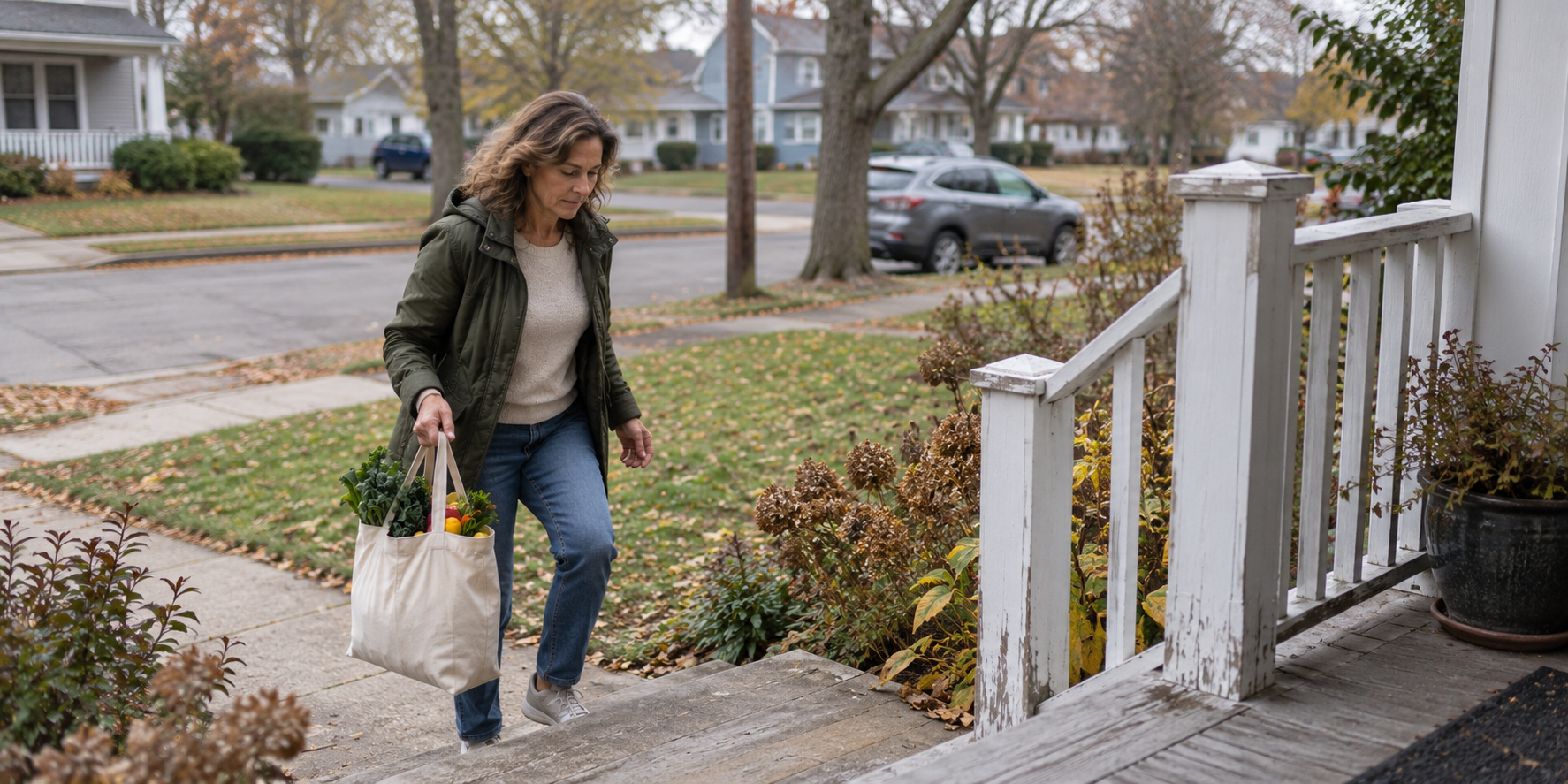
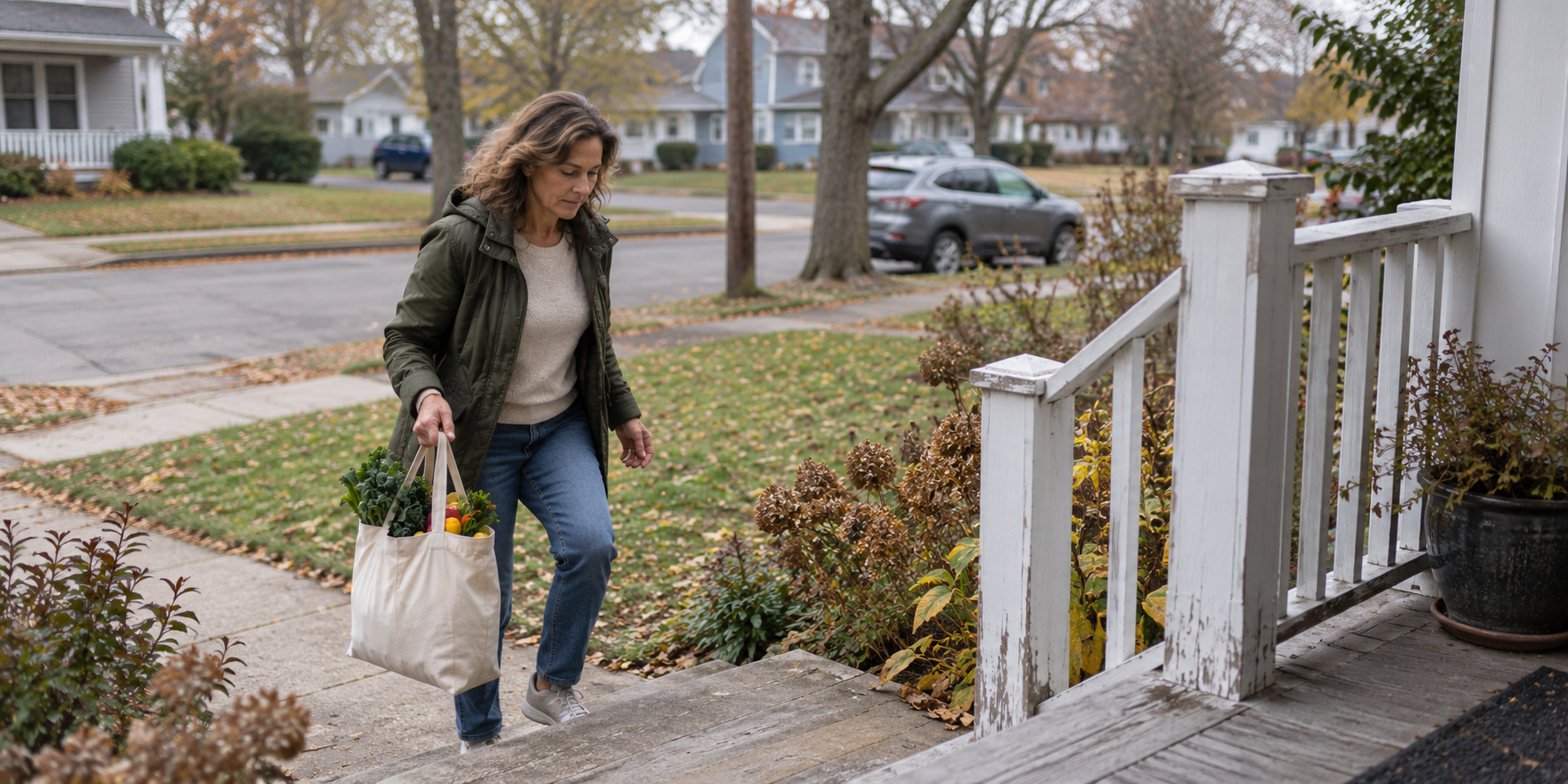
You might not care how much you can squat. You probably do care whether you can carry groceries without your back tightening up, get off the floor comfortably, hike with friends, or keep up with your kids. Those are strength goals, too.
Aging well is often described as a vague promise. In the gym, we can make it concrete: practice the movements you want to keep, build enough muscle to make them easier, and increase the challenge as your body adapts.
Why strength belongs in your routine
Muscle-strengthening activity is part of the U.S. Physical Activity Guidelines for adults: at least two days each week, alongside aerobic activity. That recommendation is about health and function, not appearance. Research in older adults also shows that resistance training can improve strength and aspects of physical function.
Walking, cycling, and other aerobic activities are valuable. But if climbing stairs or lifting a suitcase feels difficult, getting your heart rate up alone may not solve that problem. Your legs, hips, back, and shoulders need practice handling resistance.
Start with the movements that show up in your life
A useful strength session doesn't require complicated exercises. Think in movement families:
Sit and stand: A chair squat or controlled sit-to-stand builds capacity for chairs, stairs, and getting off the floor.
Hinge: A light kettlebell deadlift or elevated hip hinge teaches your hips to help with lifting.
Push: A wall push-up, incline push-up, or chest press builds upper-body strength.
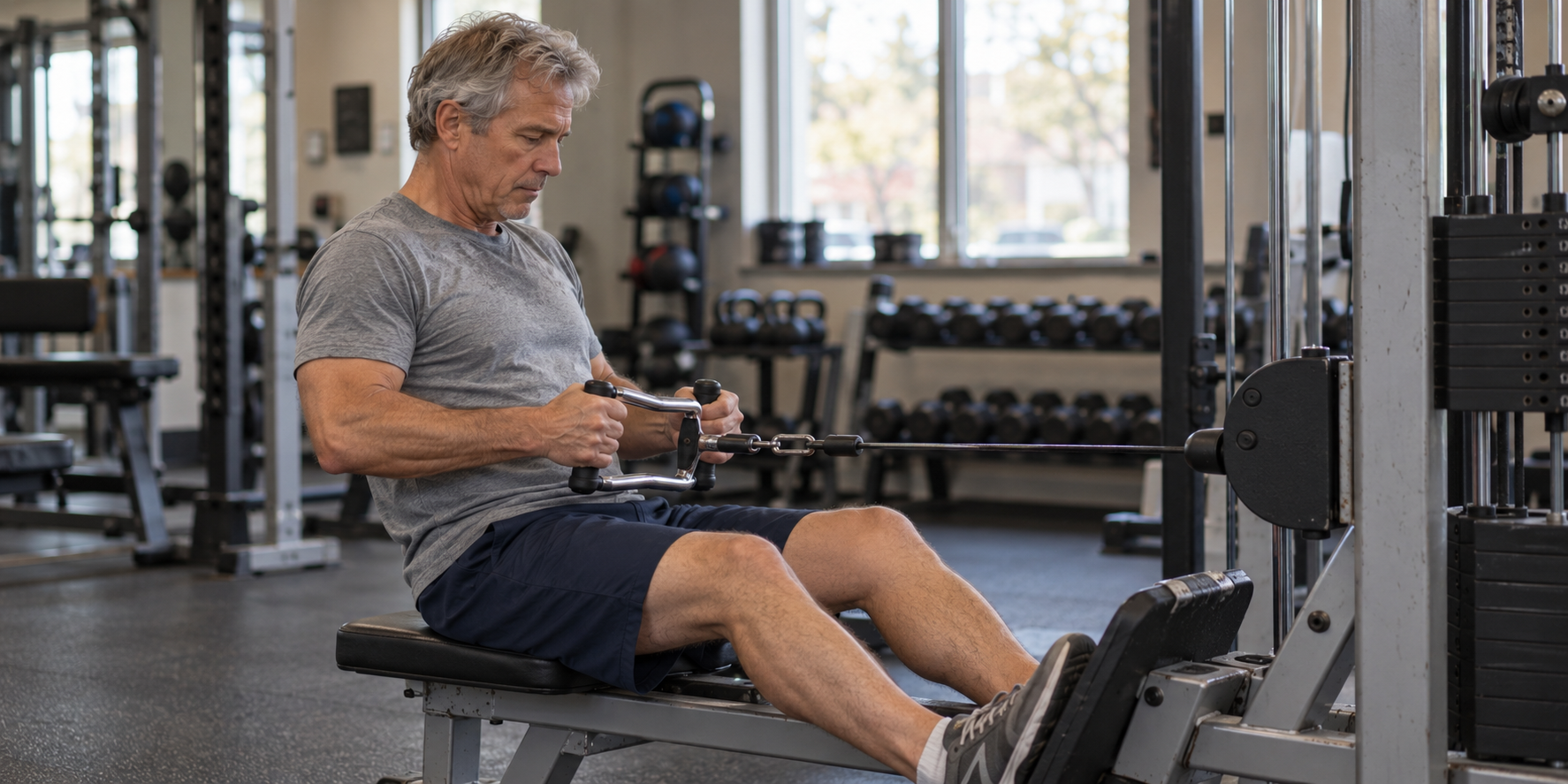
Pull: A cable row or supported dumbbell row helps you lift and carry with more control.
Carry and brace: Carrying weights or practicing a stable side plank challenges the trunk in ways that resemble daily tasks.
There is no award for choosing the hardest version. If a squat bothers your knee, adjust the depth, use a higher seat, or choose a different exercise. If a hinge irritates your back, reduce the load and range while you work on the pattern. The right starting point is one you can perform with control and repeat consistently.
A simple two-day starting plan
Leave at least a day between sessions when you can. Begin with a short warm-up: an easy walk or march, then a few comfortable repetitions of the movements you'll train.
Day A
Sit-to-stand from a chair — 2 sets of 6–10
Supported dumbbell or cable row — 2 sets of 8–12
Elevated kettlebell deadlift or hip hinge — 2 sets of 6–10
Farmer carry — 2 comfortable walks of 20–30 seconds
Day B
Step-up to a low step or another sit-to-stand variation — 2 sets of 6–8 per side, as appropriate
Incline push-up or chest press — 2 sets of 8–12
Glute bridge — 2 sets of 8–12
Side plank from the knees or a suitcase carry — 2 rounds per side
Choose a resistance that feels challenging near the end of each set while leaving a few good repetitions in reserve. Rest long enough to move well on the next set. If you've been inactive, even one set is a worthwhile place to start; build gradually. [1]
How to know when it's time to progress
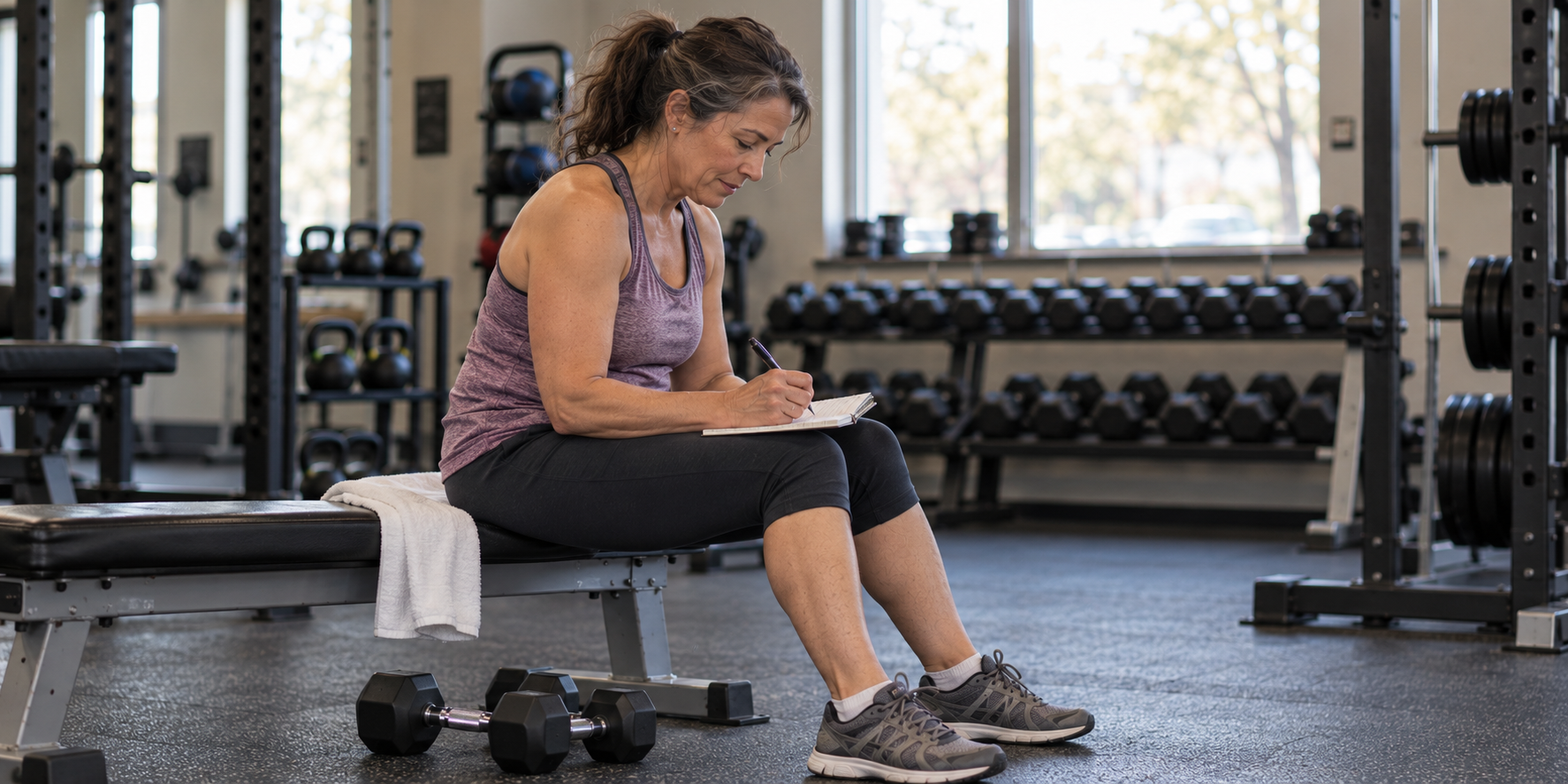
Progress doesn't always mean heavier weights. You could add a repetition, improve your control, use a slightly fuller comfortable range of motion, or carry a weight a little farther. When the current version feels steady across several sessions, make one small change and see how you respond.
Pay attention to your life outside the gym as well. Are stairs less daunting? Can you carry a bag without shifting awkwardly? Is it easier to stand up after playing on the floor? Those observations matter, even if a scale or fitness watch doesn't capture them.
Strength training isn't reserved for people who already feel fit. It can be a way to build toward the activities you've been avoiding. Start where you are, make the work repeatable, and give yourself time to get stronger.
Want help finding your starting point? Movement Lab can help you build a training plan around your goals, current capacity, and the movements that matter to you.